
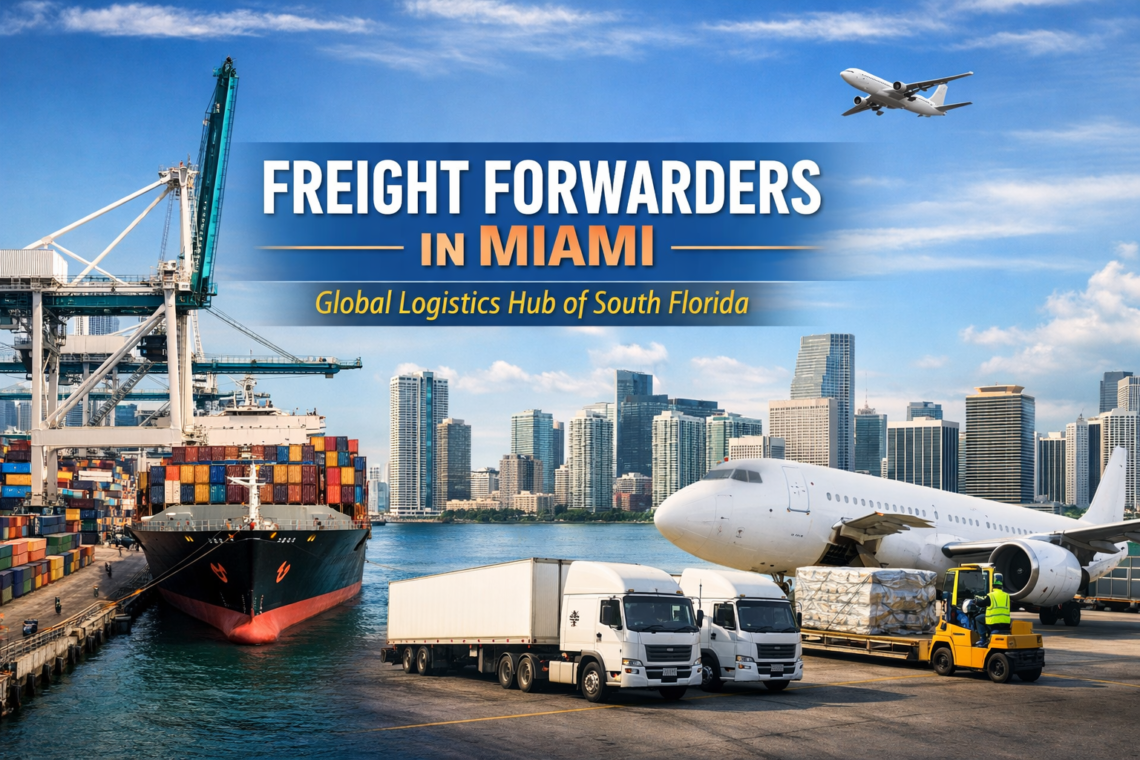
Freight Forwarders in Miami Explained: How Global Cargo Moves Through South Florida
Miami is one of the most important logistics gateways in the United States. Serving as a bridge between North America, Latin America, the Caribbean, and global markets, the region handles massive volumes of air, ocean, and multimodal cargo every day. At the center of this activity are freight forwarders in Miami, coordinating transportation, documentation, compliance, and execution across complex supply chains.
For importers, exporters, manufacturers, and distributors, understanding how freight forwarders operate in Miami—and why they matter—is critical to moving goods efficiently and avoiding costly delays.
This article explains what freight forwarders do, why Miami is a strategic hub, and how businesses can benefit from working with experienced freight forwarding partners.
What Is a Freight Forwarder?
A freight forwarder is a logistics professional or company that arranges the transportation of goods on behalf of shippers. Unlike carriers, freight forwarders do not usually own planes or vessels. Instead, they act as coordinators—managing carriers, routes, documentation, customs processes, and handoffs to ensure cargo moves smoothly from origin to destination.
Core freight forwarding responsibilities include:
- Carrier selection and route planning
- Air and ocean freight coordination
- Export and import documentation
- Customs clearance support
- Cargo consolidation and deconsolidation
- Coordination with trucking and distribution partners
In high-volume trade hubs like Miami, freight forwarders play a critical role in keeping cargo moving through congested ports and airports.
freight forwarding services in MiamiWhy Miami Is a Global Freight Forwarding Hub
Miami’s geographic location makes it uniquely valuable for freight forwarding operations. The region serves as:
- A primary U.S. gateway to Latin America and the Caribbean
- A major air cargo hub with extensive international connectivity
- A high-capacity seaport region handling containerized and breakbulk cargo
- A convergence point for regional and national trucking corridors
This concentration of infrastructure means freight moves quickly—but also that congestion, documentation errors, or poor coordination can cause serious delays. Freight forwarders in Miami help shippers navigate these challenges by managing complexity at each transfer point.
The Role of Freight Forwarders in International Trade
International shipping involves far more than moving cargo from point A to point B. Each shipment must comply with regulations, documentation requirements, and carrier constraints that vary by country, mode, and commodity.
Freight forwarders help by:
- Preparing and validating shipping documents
- Coordinating customs filings and compliance
- Managing Incoterms responsibilities
- Scheduling and tracking multi-leg shipments
- Resolving exceptions when delays occur
For companies shipping to or from Latin America, freight forwarders in Miami often serve as the primary control point for international logistics execution.
Air Freight Forwarding in Miami
Miami is one of the largest air cargo gateways in the country. Air freight forwarders manage time-sensitive shipments that require speed and reliability, including:
- High-value goods
- Perishables
- Emergency or expedited cargo
- E-commerce and replenishment shipments
Air freight forwarding involves tight coordination with airlines, ground handlers, customs brokers, and trucking partners. A missed document or incorrect booking can result in delays that ripple through the supply chain.
Ocean Freight Forwarding in Miami
Ocean freight forwarders in Miami handle containerized, consolidated, and project cargo moving through South Florida ports. Their responsibilities typically include:
- Booking vessel space
- Managing bills of lading
- Coordinating drayage and port transfers
- Supporting FCL and LCL shipments
- Handling transshipment and redistribution
Given the high volume of cargo flowing through Miami, experienced ocean freight forwarders help shippers avoid demurrage, detention, and port congestion issues.
How Freight Forwarders Work with Trucking and Distribution
Freight forwarding does not stop at the port or airport. Most shipments require downstream trucking, cross docking, or distribution to reach their final destination.
Effective freight forwarders coordinate:
- Drayage from ports and airports
- Cross docking for rapid transfers
- Regional and long-haul trucking
- Delivery scheduling and appointment management
This coordination ensures cargo does not stall between transportation modes.
For an example of a freight forwarding operation integrated with broader logistics services, see:
👉 https://international3pl.com/freight-forwarding-services/
which outlines how freight forwarding can align with trucking, warehousing, and distribution under one logistics framework.
Benefits of Working with Freight Forwarders in Miami
Businesses that partner with experienced freight forwarders gain several advantages:
Reduced Risk
Forwarders manage documentation, compliance, and carrier coordination, reducing the likelihood of costly errors.
Better Transit Visibility
Freight forwarders provide shipment tracking and proactive exception management.
Cost Optimization
By selecting the right carriers and routes, forwarders help control transportation costs.
Scalability
Freight forwarding allows companies to scale internationally without building in-house logistics teams.
When You Need a Freight Forwarder
Freight forwarding is especially valuable when:
- Shipping internationally
- Managing multiple carriers or modes
- Handling customs-sensitive cargo
- Coordinating time-critical deliveries
- Expanding into new markets
In these situations, freight forwarders act as both operators and advisors.
Choosing the Right Freight Forwarder in Miami
Not all freight forwarders offer the same capabilities. When evaluating options, consider:
- Experience with your trade lanes
- Air and ocean freight expertise
- Customs and compliance knowledge
- Network of trucking and logistics partners
- Ability to handle exceptions and disruptions
A well-chosen freight forwarder becomes an extension of your supply chain team rather than just a service provider.
Freight Forwarding as a Strategic Advantage
In today’s global economy, logistics reliability is a competitive differentiator. Freight forwarders in Miami help businesses move faster, reduce friction, and maintain control over international shipments in one of the world’s most dynamic trade environments.
When freight forwarding is integrated with downstream logistics services, companies gain speed, flexibility, and resilience across their supply chains.
What do freight forwarders in Miami do?
Freight forwarders in Miami arrange and manage the transportation of goods by air, ocean, and land, handling documentation, carrier coordination, and customs processes.
Why is Miami important for freight forwarding?
Miami is a major gateway to Latin America and the Caribbean with extensive air and ocean cargo infrastructure, making it a key hub for international trade.
Do freight forwarders handle customs clearance?
Freight forwarders typically coordinate customs clearance through licensed brokers and ensure documentation is compliant with regulations.
Is a freight forwarder necessary for international shipping?
While not legally required, freight forwarders are highly recommended for international shipments due to the complexity of regulations, carriers, and documentation.
How do freight forwarders work with trucking companies?
Freight forwarders coordinate drayage, regional trucking, and final delivery to ensure cargo moves seamlessly beyond ports and airports.